

Orange County Family Law Attorney
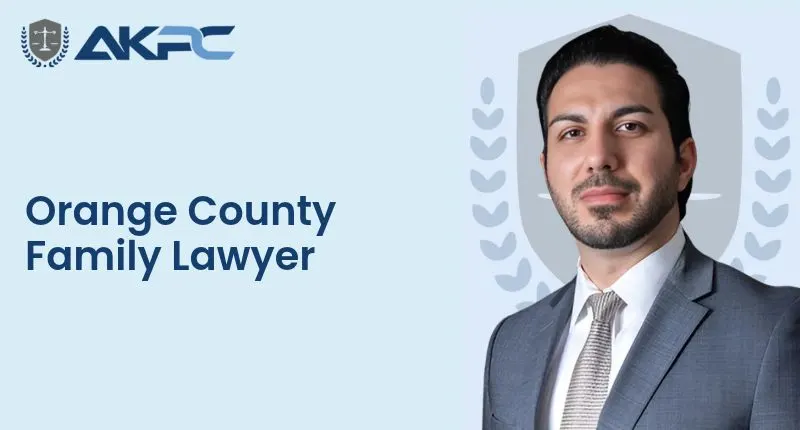
Orange County Family Lawyer
A divorce, a custody dispute, or a fight over support payments can turn daily life upside down, even when every decision you make feels urgent and permanent. You need someone who can explain what is actually happening in your case, answer your calls, and stand next to you through every hearing.
Arman Khoshnood, an AKPC Law Orange County family lawyer admitted to the California bar in 2011, built this firm around that kind of steady, personal attention.
He has been selected to Super Lawyers for 2025 and 2026 in family law, and he limits his practice to family law matters so that every case gets his full attention instead of splitting his time across unrelated practice areas.
Whatever stage your family law matter has reached, from the first filing to a post-judgment modification, a dedicated Orange County family law attorney can help you understand your options and move the case forward with less guesswork.
All Family Law Solutions Start With a Plan
A family lawyer is committed to their clients and their goals. A knowledgeable Orange County attorney can address a variety of different concerns. They can provide invaluable assistance with:
- Extensive support throughout divorce and its subsequent legal processes
- Advocacy for parents establishing or otherwise seeking to adjust custody and child support agreements
- Negotiation and mediation advocacy during high-stakes property issues like division of real estate, investments, pensions, retirement plans and businesses
- Protecting your safety and rights during issues involving family and intimate partner violence
With so much at stake with family law issues, an attorney can work hard to meet your needs and make sure your voice is heard throughout the process.
Our familiarity with local entities like the Lamoreaux Justice Center, Central Justice Center, Family Law Facilitator, and the Family Court Services at the Superior Court of California, means AKPC Law can efficiently guide you through the legal procedures required in family law cases.
Take The Right Steps TodayTo Shape Your Future
Avoiding Court Through Alternative Dispute Resolutions
Family law covers far more than divorce, but divorce volume still shapes how busy Orange County’s family courts stay. Irvine alone is home to an estimated 318,764 residents as of 2025, according to the U.S. Census Bureau. That makes it one of the larger cities feeding filings into the county’s family law courtrooms.
With so many different types of family law cases, some families want to avoid the hassle of dealing with the family courts. With a lawyer, one way families can achieve cost-effective outcomes is by exploring creative legal solutions, like alternative dispute resolution methods.
In California, many cases are resolved before a trial through some type of alternative dispute resolution. If you are interested, an attorney can discuss the following:
- Alternative dispute resolution as a concept
- Mediation
- Collaborative divorce
- Cooperative divorce
Every family law case is different, and the most beneficial method of resolving your family law issues depends on the circumstances of your situation.
Reasons to Hire an Experienced Orange County Family Attorney: Serving You with Compassion
An attorney can provide you with peace and reassurance while working through a family issue. They can:
- Avoid costly mistakes, which people working without an experienced attorney often make
- Help you work through complex legal procedures
- Provide objective, reliable legal advice
- Protect your rights and legal interests during what can be an overwhelming, stressful time
An attorney well versed in California procedures and the requirements of the Orange County court system can help keep the process moving as efficiently as your case allows. That can reduce the stress involved in these cases.
Meet the Orange County Family Law Attorney Guiding Your Case
AKPC Law recognizes the unique characteristics of Orange County, whether you live in Irvine areas like Woodbridge, Northwood, or Turtle Rock. Hyper-localized knowledge of the area allows the firm to provide strong legal advice, tailored to your family’s specific circumstances.
At AKPC Law, you work with an attorney who sees you as a person, not just another case to finish. Arman Khoshnood provides clear, responsive communication and focuses exclusively on family law, allowing a personalized approach to representing clients. He can be a source of compassionate and reliable legal support for any family law matter.
Arman Khoshnood has spent his career representing Southern California families in divorce, custody, support, and property disputes. He also knows that the law can be the strongest tool you have to put your future back on track.
Mr. Khoshnood learns about you and your needs and focuses on creating personalized legal solutions that fit your life. With his help, you will have the advocate you need to create a future you want.
He earned his J.D. cum laude from the University of La Verne College of Law in 2011, where he received a CALI Award for the highest grade in Alternative Dispute Resolution (ADR) and served as an associate editor of the La Verne Law Review. He also holds a B.A. in Political Science from California State University, Fullerton.
That ADR training shows up in how he approaches cases: he has handled numerous mediations and arbitrations in addition to litigated hearings, which gives families in contested matters more than one route toward resolution.
Understanding California’s No-Fault Divorce Law and What It Means for You
California does not require either spouse to prove the other did something wrong before granting a divorce.
Under Cal. Fam. Code § 2310, a court may grant a dissolution of marriage on the ground of irreconcilable differences, meaning disagreements serious enough that the marriage cannot reasonably continue, or on the ground of permanent legal incapacity to make decisions.
In practice, almost every divorce filed in Orange County proceeds on irreconcilable differences, since neither spouse has to show misconduct by the other.
That no-fault structure does not mean a divorce finishes quickly. California also generally imposes a six-month waiting period measured from the date the other spouse is served or responds, whichever happens first, before a court can finalize marital status.
To file in California at all, at least one spouse generally needs six months of residency in the state and three months in the county where the case is filed. Understanding these timelines early helps you plan around them instead of being surprised by them partway through your case.
How California Courts Decide Child Custody in Orange County
When parents cannot agree on custody and visitation, a judge does not pick a side at random.
Under Cal. Fam. Code § 3011, the court must consider the health, safety, and welfare of the child first. It also considers any history of abuse by either parent, each parent’s history of drug or alcohol use, and the nature and amount of contact each parent has had with the child. The law does not let a judge favor a parent because of that parent’s sex.
In Orange County, contested custody matters are generally handled out of the Lamoreaux Justice Center in the city of Orange. The center houses the county’s Family Law, Family Court Services, and Self-Help Center operations under one roof.
Family Court Services provides mediation before many contested custody hearings, since California generally requires parents to attempt mediation before a judge decides disputed custody or visitation issues.
Knowing which best-interest factors the court actually weighs, and how local mediation works before a hearing, can change how you prepare your side of the case.
Property Division, Support, and High-Asset Family Law Matters
California is a community property state, which generally means most income and property acquired during the marriage belongs equally to both spouses, regardless of whose name is on the account or title.
Separate property, such as assets owned before the marriage or received by gift or inheritance, generally stays with the spouse who owns it, though the line between separate and community property gets contested often, especially with retirement accounts, businesses, and real estate that grew in value during the marriage.
Spousal support works differently from the property division calculation. Judges weigh factors such as each spouse’s earning capacity, the marriage’s standard of living, and each spouse’s age and health before setting a support amount or duration.
Arman Khoshnood is also a licensed real estate broker. That gives him a practical understanding of how property valuations and real estate transactions factor into settlement negotiations when a family home, rental property, or investment portfolio needs to be divided or sold as part of a divorce.
Where Orange County Family Law Cases Are Heard
Family law, juvenile, and domestic violence matters in Orange County are generally handled at the Lamoreaux Justice Center, located at 341 The City Drive South in the city of Orange. The building also houses the Office of the Family Law Facilitator, which can help self-represented parties with child and spousal support paperwork, and the Self-Help Center for general family law filings.
Having a lawyer who already understands how these departments interact, and what the Family Court Services mediation process involves before a custody hearing, can save real time compared to learning the system for the first time while a case is already underway.
How Do Consultations With AKPC Law Work?
AKPC Law is right in The Atrium, which sits in the heart of the Irvine Business Complex (IBC), a bustling commercial hub. If you plan ahead, there’s plenty of convenient parking.
AKPC Law offers consultations by Zoom or in person, and Mr. Khoshnood practices in English, Farsi, and Spanish. Clients have also described him as a skilled negotiator who kept them informed from the start of their case to the end, and as thorough and prepared when a matter went to a court hearing.
A consultation gives you direct time with the attorney who will actually handle your case rather than an intake coordinator.
Frequently Asked Questions
Does AKPC Law offer a free consultation for family law cases?
No. AKPC Law does not offer free consultations, but a paid consultation puts you directly in front of Arman Khoshnood rather than a staff member, so you get a real assessment of your situation from the attorney handling your case.
Where do I file for divorce or a custody case in Orange County?
Most contested family law, juvenile, and domestic violence matters in Orange County are filed and heard at the Lamoreaux Justice Center at 341 The City Drive South in the city of Orange, which also houses the Family Law Facilitator and Family Court Services.
How long does a divorce take in California?
California generally requires a mandatory six-month waiting period from the date the other spouse is served or responds before a court can finalize marital status, so even an uncontested divorce rarely finishes faster than that. Contested issues like custody, support, or property division can add significant time beyond that minimum.
What does “irreconcilable differences” mean in a California divorce?
It means the court has found substantial reasons that the marriage cannot continue, without either spouse having to prove the other did anything wrong. Family Code section 2310 lists it as the primary ground for dissolution in California’s no-fault system.
How does a judge decide child custody in Orange County?
Under Family Code section 3011, the court must weigh the health, safety, and welfare of the child above other factors. It also considers any history of abuse and each parent’s contact with the child. Orange County generally requires parents to attend mediation through Family Court Services before a contested custody hearing.
Do I need a lawyer if my divorce is uncontested?
You are not required to have one, and the Family Law Facilitator’s office at the Lamoreaux Justice Center can help with basic paperwork. Many people still choose a lawyer to review the settlement terms, since an uncontested divorce can still involve retirement accounts, tax consequences, or property that is easy to undervalue without legal guidance.
What is the difference between legal separation and divorce in California?
A legal separation lets the court divide property, set support, and establish custody without ending the marriage itself, while a divorce (called dissolution in California) formally ends the marriage. Both can be filed under the same part of the Family Code and often follow similar procedures.
Does AKPC Law handle domestic violence restraining orders?
Yes. Protecting a client’s safety and legal rights in matters involving family or intimate partner violence is one of the firm’s practice areas, alongside divorce, custody, support, and property division.
Does Arman Khoshnood speak Spanish or Farsi with family law clients?
Yes. Mr. Khoshnood practices in English, Farsi, and Spanish, which allows him to communicate directly with clients in Orange County’s Persian and Latino communities without relying on a translator during sensitive conversations about their case.
Talk With an Orange County Family Lawyer About Your Next Step
Family law decisions made in the next few weeks can affect your parenting time, your finances, and your home for years to come. An Orange County family lawyer who focuses only on family law, and who already knows how the Lamoreaux Justice Center and Family Court Services operate, can help you walk into each step with a plan instead of guesswork.
Contact Arman Khoshnood at AKPC Law today to set up a time to talk through your situation and options.

Need Legal Help?
Request A Consultation
In addition to being an experienced family law attorney, Arman is also a licensed real
estate broker who can help you and your family buy and sell property.


© Copyright 2026 AKPC Law Firm. All rights reserved.Disclaimer | Site Map | Privacy PolicyDigital Marketing By: 
*Images are obtained under license from Canva and other third-party stock image providers, with attribution included where required.